

We all want to keep our fur babies safe. Unfortunately, accidents happen, and at some point, your dog may experience a cut, bite, burn, puncture, or nail injury.
Of course, if it’s a major wound or you’re concerned about internal damage, you should take your dog to the vet right away. However, you might be able to treat minor injuries at home. That’s why it is important to be prepared.
The team at Acoma Animal Clinic is here to help. In this article, we’ll cover dog wound care and how you can care for your fur baby to help reduce pain, prevent infection, and speed up their recovery.
What Are Some Common Dog Wounds?
Injuries often occur on a dog’s face, legs, paws, and ears. Dog wound care starts with identifying the type of wound your dog has and its severity. Here’s a brief rundown of some of the common injuries that dogs may experience:
Cuts and Abrasions: A minor cut or abrasion is a small break in their skin. Dogs are playful and adventurous, and sharp objects, like a stick or jagged rock, can cause minor cuts. You can usually treat minor cuts at home; however, if it’s a deep cut, it may require stitches, and you should see your veterinarian right away.
Bites or punctures: These wounds are punctures in the skin that often result from a fight with another dog or another animal with sharp teeth. These wounds are especially susceptible to infection, so they need to be treated right away.
Nail injuries: It is common for dogs to experience nail injuries. It could be the result of a nail that is trimmed too short during grooming, or a nail that your dog has broken or torn. Nail injuries can be painful.
Burns: Accidentally coming in contact with extreme heat or flames, from say a stove or campfire, can burn your dog’s skin.
Paw wounds: It is common for dogs to hurt their paws. For instance, they could step on a sharp object and cut or tear a pad while exploring outside.
Know These Dog Wound Care Tips
If your dog is injured, here are some general wound care tips to follow:
- Assess the injury: It is stressful when your dog is hurt, but try to remain calm and assess the injury. How bad is the bleeding? Is there skin missing? If it’s a puncture, is there something inside, like a piece of glass or sharp metal, that needs to be removed?
If you think the injury is severe, contact your veterinarian right away. If it’s just a minor injury, you can likely treat it at home. If you’re not certain, it’s best to err on the side of caution and ask your vet.
- Stop the bleeding: Gently apply pressure with a clean cloth or gauze to stop the bleeding. If the bleeding is heavy or does not stop, take your pet to the veterinarian right away.
- Clean the wound: Gently rinse the wound with lukewarm water and a pet-safe antiseptic or saline solution to remove any dirt, debris, and excess blood. Avoid using harsh products like hydrogen peroxide.
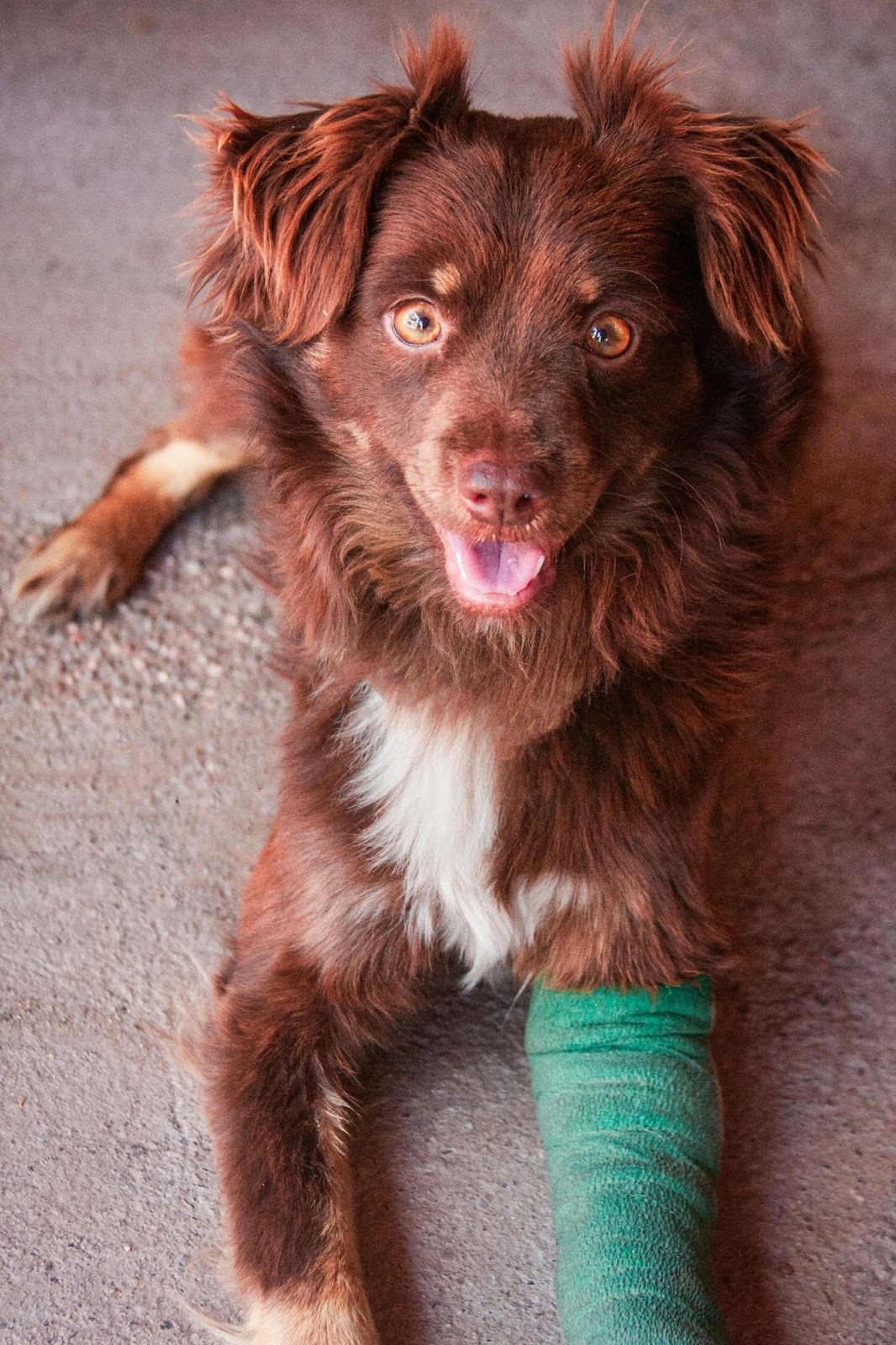
- Apply a bandage: To help prevent bacteria from getting into the wound, gently apply a sterile, non-stick bandage. Be careful not to make the bandage too tight and change it daily, or more frequently if it gets dirty.
- Prevent licking: To keep wounds from getting infected and help the healing process, try to prevent your dog from licking the injured area. You can buy a recovery cone or e-collar at your local pet supply store if you don’t already have one.
- Watch for infection: Keep a close eye on the wound to watch for signs of an infection. If you notice swelling, redness, a foul odor, or oozing, it could be infected, and it’s time to contact your vet.
When Your Pet Needs Immediate Vet Care
As previously mentioned, you may be able to treat minor injuries at home. However, there are times when you should skip at-home treatment and head right to the vet for emergency care. If your dog experiences any of the following, contact the veterinarian right away:
- Heavy bleeding or bleeding that refuses to slow or stop
- Deep cuts or punctures
- Wounds that show signs of infection
- Bite wounds
- Wounds that don’t seem to be healing
- An object appears to be embedded deep into the wound
We understand it can be stressful when your pet is injured. If you have any concerns or are not sure if the injury requires professional care, contact us right away. The team at Acoma Animal Clinic is here for you.